Saturday, March 19, 2011

No 15. POSTCARD THEODORE: SURVIVING DISASTER

With so much loss of life from recent natural catastrophes in Japan and New Zealand, the floods and cyclone that swept north-eastern Australia at the start of the year have largely become yesterday's news for all but those directly affected. Yet up and down the Queensland coast and hinterland, there are inspiring stories of resilience and the human capacity to endure as individual communities band together to rebuild. Prince William - destined one day to be King of Australia if the country remains a monarchy - has been warmly received during a visit to some of the worst affected areas. For our part, Grubsheet has also had the opportunity to meet flood-affected residents of the only town in Australia to have ever been completely evacuated by air - the small community of Theodore, some 500 kilometres north-west of Brisbane.

Theodore has a population of only 450 or so. But in the story of its people are some important lessons on how to survive disaster that will resonant in Christchurch and northern Honshu, all of them centred on individuals being able to rely on others. The themes are universal but it's what Australians like to call mateship.

The Dawson: A river bites back
Theodore is at the fork of two waterways - the Dawson River and Castle Creek - whose swollen banks were breached at the end of December by a flood peak that reached a record 14.7 metres. As a sea of murky water and sludge enveloped residential areas, sometimes to roof height, a fleet of helicopters plucked Theodore's citizens to safety in driving rain and deposited them at the adjacent mining town of Moura, 50 kilometres away. There, the Anglo-American mining company housed and fed them for three weeks before the floodwaters receded and they were allowed back to survey the damage.

The experience was traumatic for the whole community and only now are many people being hit by an acute sense of despondency, as the extent of their loss sinks in. Tears are not far from the surface and each cloud cover and rain drop brings a renewed sense of dread. "I just can't sleep if I hear rain on the roof", one resident tells us. "I have terrible nightmares of the water raging around me again and being covered in mud", says another. In some cases, the pain is exacerbated by disputes with insurance companies over the extent of flood coverage. "I'm developing a real hatred for my own insurer", says Liz, the owner of the local bus company. "I faithfully handed over my premiums for years expecting them to come to my aid in a crisis. Now we're at war".

But the story of Theodore is also one of survival and inspiration and especially the capacity for ordinary people to provide extraordinary service to their fellow citizens. Theodore takes it name from a former Queensland Premier,"Red Ted" Theodore, and is one of the few small towns in Australia to have been designed by the great Canadian architect Walter Burley Griffin, who designed Canberra, the national capital. "Theodorians" - as the local people call themselves - are immensely proud of their home  and the sense of community it inspires. They continually refer to the "spirit of Theodore", as if the place itself is imbued with the optimism and pioneering "can do" attitude of its residents. That spirit is embodied in the local doctor, Associate Professor Bruce Chater ( yes, who says rural Queensland doesn't get top medical attention?)  who's been a Theodore resident for 30 years.
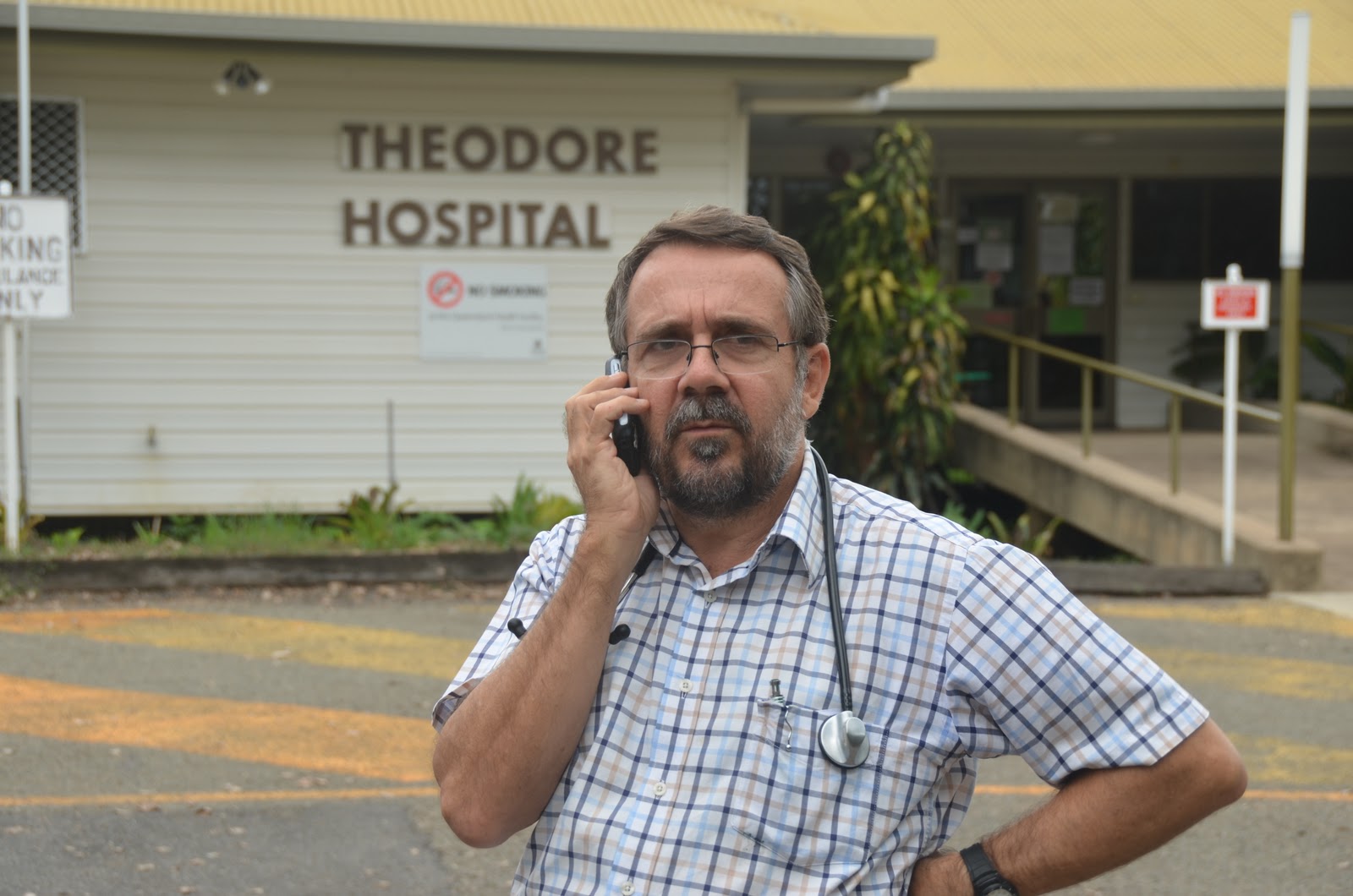
Duty of Care: Associate Professor Bruce Chater
In many ways, Bruce is the glue that holds this community together, though he insists himself that it's the community spirit of Theodore that really binds this small population into such a potent, united front. All that spirit needed to be mustered against the elements just after Christmas, when torrential rain produced flash floods that bore down on the town from the two waterways that surround it. As the floodwaters rose, Bruce took to the streets on his jet ski to do his rounds. And as the crisis worsened, he was part of the small team of prominent residents who marshalled the population into action. Cut off on all sides by flooded roads, the very survival of the people of Theodore was at stake as the town itself slowly drowned. An urgent air lift was the only option and so began a remarkable episode in the long history of disaster relief in Australia.

The only remaining dry land in town was a strip of roadway between the community-owned pub (pictured) and the Returned Services League clubhouse opposite. With the residents now crammed into the RSL after abandoning their flooded homes, a fleet of helicopters - private as well as military Blackhawks - began ferrying them to high ground in the adjacent mining town of Moura. The home video pictures of this evacuation on December 28th are startling, huddled groups sprinting towards the choppers in driving rain and four craft at a time gingerly taking off from an ever dwindling island in the middle of town. 351 people were moved in this way without incident in a matters of hours, a commendable feat under any circumstances but especially in such atrocious conditions. As one resident puts it - "God was smiling on Theodore that day. It was a bloody miracle".

Warm welcome on dry land: The Moura mine
At the other end of the journey, the residents found a welcome that reduced many to tears of relief and gratitude. The timing of the disaster was fortunate in one sense in that the Anglo-American mine at Moura was in Christmas shutdown and the staff quarters were largely vacant. Without hesitation, the mine management agreed to a request from Bruce Chater and the other community leaders to help house the evacuees. They also organised such necessities as items of clothing that the residents of Theodore had been obliged to leave behind. For three weeks, the mine housed and fed the evacuees before the floodwaters subsided and they were able to return to their homes. Even now, some Theodore residents break down when they recount the many kindnesses extended to them during their stay in Moura, a town with an equally fierce sense of community and a history of acute rivalry with Theodore, especially on the rugby field. "When we needed them, they were there for us", says Vaughn Becker, a local Banana Shire councillor, the tears welling in his eyes. "It was the epitome of the Aussie spirit of mateship and we'll never forget it".

The random acts of kindness continued when Theodore residents returned home to begin the heartbreaking task of assessing their losses and rebuilding. Sharyn, who owns the local bakery and cafe, tells a typical story. " I was just standing in the shop overwhelmed by everything, the mud, the water, everything. Suddenly a complete stranger appeared at the door and said 'I think you need some help' and immediately set to work removing the debris and cleaning up. This bloke stayed for three days. I only ever knew him as Barry the boilermaker from Biloela (a nearby town). But bless him. I'll never forget what he did for me".

It's this spirit that continues to be celebrated in Theodore as the town slowly recovers. It can't be prescribed, legislated for or enforced. It comes from the heart of people of goodwill. It is the essence of human kindness. And we can only hope that the same spirit prevails in the areas of devastation in northern Japan that fill our screens now, far from Theodore and the equally unforgiving Australian bush.

Graham Davis

Tuesday, March 15, 2011

No 14. A QUESTION OF RESPECT

Australians are renowned for their disrespect for authority. Usually this is cast as a healthy disrespect, as if the very notion of authority sits uncomfortably on the broad shoulders of your average laconic Aussie. We seem to regard ourselves as perfectly entitled to tell anyone in authority to "get stuffed", especially if that person is an effwit and violates our inviolable code of a "fair go". Anywhere else in the world, national leaders can expect deference but not here. We voted the bastards in and we can vote them out. And they'll bloody well put up with whatever we dish out to them.

Prime Minister Julia Gillard's latest appearance on ABC Television's Q and A program is conclusive proof that this disrespect has gone too far. A few years back, eyebrows were raised when television host Ray Martin took it upon himself to address then Prime Minister Paul Keating as Paul and later, John Howard as John. Martin, at least, was "Mr Australia" at the time, the darling of the blue rinse set and ubiquitous on our screens as the host of choice for everything from election debates to Carols By Candlelight. Now, ordinary members of a studio audience think nothing of addressing the PM as Julia, as if addressing an equal when she's nothing of the sort. We clearly weren't alone in our discomfort with this overfamiliarity. One viewer wondered by Tweet if it was because she was a woman that the PM got to be addressed by her first name. But did anyone - even the cheekiest Aussie - dare to call Mrs Thatcher Margaret?

As it happens, Grubsheet can't abide Julia Gillard and cringed every time she began answering a curly question with a schoolgirl giggle. With her government unravelling, every question nowadays is a curly one, be it her relationship with her predecessor, Kevin Rudd, the leak from her office that Rudd is "out of control" or the ultimate in creepy-cringe, her lachrymose speech last week to the US Congress. Gillard and her advisors seem to think a strangled, faux cackle is the best way to defuse an incoming Exocet from the studio audience. Yet this is just another insult to our collective intelligence, modest as that might be. On this performance, The Prime Minister will be cackling all the way out the front gate of The Lodge.

Some deluded viewers seemed - by their mindless Tweets - to believe that this was a triumphant outing for the PM.  One sympathetic commentator - Fairfax Media's Phillip Coorey - argued that while she hadn't won any votes, she hadn't lost any either. Yet to us, the faces of the studio audience said it all. When she appeared on Q and A before the election, the audience cutaways ranged from avuncular to the kind of beatific adoration normally reserved by parents for junior's first school play. At best, this time the faces were quizzical, doubtful or disengaged. At worse, they were cynical, even hostile. On the countenance meter, Gillard is gone.

That said, she is still Australia's national leader, the person guiding us through the suddenly more perilous shoals we find ourselves in. I was going to say "the person we elected" to guide us but that isn't strictly true. Yet even if she governs by default  - propped up only by the Greens and independents - she's still "the chosen one", wearing the mantle - however unsteadily - of Barton, Curtin, Chifley, Menzies and all the others who came before her. The office itself warrants respect and Gillard deserves to be addressed as Prime Minister, not Julia, just as Obama is Mr President and not Barack.

But in its disrespect, perhaps the audience is only taking its cue from the ABC, which sunk to new lows last night by ambushing the PM with a gratuitous video question from the computer hacker and fugitive from Swedish justice, Julian Assange. It's one thing for the public broadcaster to so spectacularly fail in its charter obligation to inform - as it did with the miserable performance of News 24 at the weekend - but quite another to actively participate in the crudest of political stunts. Enabling Julian Assange to accuse the Prime Minister of treason in a pre-recorded segment paid for by the Australian taxpayer isn't just the height of disrespect. It's an outrage.

Graham Davis

Monday, March 14, 2011

No 13. WHEN THE NEWS ITSELF IS A DISASTER

The global ABC "how to do it" guide to round-the-clock news coverage has it that when a big story breaks on multiple fronts like the Japanese earthquake, tsunami and nuclear crisis, you stick with it come what may. You drop everything and devote all your resources to covering what you can. You should also provide regular updates and recaps for those just tuning in. After all, that's what a 24-hour exclusive news channel is meant to be, a place to get the very latest on demand.So what happened at ABC News 24, the dedicated news channel Australians pay to provide such a service? It's a question being asked across the Australian media after a woeful performance by our national broadcaster that goes to the heart of its integrity and credibility.

ABC News 24 started out on Friday evening, like everyone else, carrying live vision from the Japanese public broadcaster, NHK. These were extraordinary pictures from the air showing the tsunami swamping coastal areas, burning refineries and general devastation. In a Tweet, ABC Managing Director Mark Scott has said the ABC couldn't show more because it didn't have streaming rights to the NHK feed. It was evidently obliged to source material from elsewhere and turned to the BBC, which was mounting its own live coverage, freely available to its global audience on the Net. Then for some reason, the ABC had the idea that they could better manage things themselves. And so began one of the most miserable viewing experiences in living memory.

This consisted of a succession of youthful, inexperienced presenters bumbling through as best they could, parroting the same script lines again and again. Yes, we'd already known for hours that "Japan has been hit by the biggest earthquake in many years that triggered a deadly tsunami". OK, tell us more. What we needed was more detail and background. What we got instead was the same headline ad infinitum from anchors so green around the gills that they were swamped by the scale of the story. The producers tried to improve things by wheeling in some local academic opinion. But these people knew as much as the rest of us, which watching News 24 wasn't much. So the sum total of knowledge they brought to the proceedings was perilously close to zero.

Green gilled presenters: where are the new Kerry O'Briens?
When it dawned on the aforementioned producers that in news terms, they were on as shaky ground as the story, they again crossed to the BBC. There, the coverage was comprehensive, informative and authoritative, everything the ABC wasn't. Yet just as the audience finally got the nourishment they were craving, the plug was pulled again. Cue yet another frightened rabbit in the headlights of the ABC studio. It was woeful but that was just Friday night. The weekend coverage was a national disgrace.

Now, as broadcast journalists ourselves, Grubsheet appreciates the challenges and pitfalls of live television. But for a 24 hour news channel to stick with normal programming on a story this big beggars belief. All weekend, an audience crying out for more information on the Japanese catastrophe - including Australian families frantic about their missing loved ones - was aghast to find a range of programs on ABC News 24 that were so totally off the wall as to resemble a Pythonesque "not the news" spoof.

The Australian's Caroline Overington highlighted one of the miserable low points -  a debate on the national identity of Belgians and whether the Dutch language is superior to Flemish. Columnist Tim Blair over at the Daily Telegraph wondered why enraged ABC journalists didn't storm News 24 and seize control of the station. What? And spoil their weekend?

If history is any guide, the ABC is certain to cry conspiracy about Overington and Blair. Well, they're from News Limited aren't they? They're doing Rupert Murdoch's bidding on behalf of our competitor, Sky News. It won't work this time, fellas ( oh and Kate Torney, head of ABC News). Too many people were watching.

When News 24 was launched, Mark Scott made a virtue of the fact that the ABC was providing such an ambitious undertaking without any increase in public funding. The national broadcaster's bean counters squirrelled a bit from here, a bit from there and ABC news staff were required to do more for less. Bad mistake. Cut corners in news and ABC News 24 is what you get - a clutch of ingenues and pimply wannabes rather than seasoned veterans oozing natural credibility and commanding audience respect.

Scott and his lieutenants sorely need to re-learn the virtue of that old adage "less is more". Fewer hours of bland news programming and more resources devoted to ground-breaking journalism. That's the role of a public broadcaster in the digital age, not to ape its slicker competitors and wind up looking like a monkey itself.

Graham Davis

No 12. SOMETHING ABOUT YVES

The delicate, bespectacled visage of Yves Saint Laurent is one of the most memorable and celebrated images in the world of fashion. The Algerian-born French designer was a tortured genius, his creative life punctuated by periods of intense depression and substance abuse. But at its core was an enduring relationship with Pierre Berger, his one-time lover and business manager, who made YSL arguably the richest and most influential of the French fashion houses.

That relationship is the subject of a standout documentary at this year's Sydney French Film Festival - L'Amour Fou (Crazy Love) - by director Pierre Thoretton. It's not only a visual feast of fashion, art and some of the world's most beautiful people but a superbly crafted insight into a complex man and his complex relationships.

Piet Mondrian dress
The documentary opens with Yves Saint Laurent's poignant resignation news conference in 2002, Christian Dior's protege announcing that he's turning his back on almost half a century in the fashion world because he feels that he's lost his mojo. As the film unfolds, we gradually discover why through the anecdotes of Berger and some of YSL's closest confidantes, including two now faded beauties who were once his muses.  Loulou De La Falaise is the daughter of a French Marquis and Anglo-Irish fashion model who was constantly at Yves's side during his cocaine-addled forays into the night at Regine's and Studio 54. It shows. Similarly with Betty Catroux, the half Brazilian daughter of an American diplomat, whose anecdotes about her own partying with YSL emanate exclusively from behind a pair of large sunglasses (designer, bien sur).

But it's from Pierre Berger that we gain the greatest insight into YSL's character, the angels that fuelled his dazzling creativity, the demons that made him a virtual recluse towards the end of his life. The two met in 1958 and became inseparable, aside from a brief period when YSL's substance abuse got the better of him. Berger was the hard-nosed businessman who built the empire and allowed Yves to give full rein to his extraordinary creativity. All of those creations are on display in the film, the 1965 Piet Mondrian Dress, the 1967 Le Smoking Tuxedo jacket, plus all those ethnically-inspired collections worn by ethnic models - a YSL first - that brought cat-walk audiences to their feet in raptures for more than 40 years.

Le Smoking hot
Yves was more than just the fragile King of Haute Couture. He was the first designer to see the potential of the mass market in ready-to-wear and his pret-a-porter collections eventually produced more revenue than his headline fantaisies. Their vast wealth enabled Yves and Pierre to accumulate grand houses in Paris, Normandy and Morocco and an astonishing array of "stuff", including works by Picasso, Matisse and Mondrian. Pierre Berger's decision to sell off the collection after YSL's death in 2008 forms the structural centrepiece of the film, the sumptuous interiors of the couple's homes lovingly documented before the removalists do their work and the whole lot goes under the hammer at Christies. On the first day of the auction, just one work -a Matisse - sold for a record 32-million Euros. Not your average garage sale, that's for sure.

Berger reveals that the sale - the proceeds of which have gone to AIDS research - wouldn't have been possible were Yves still alive. He was simply too attached to his possessions and couldn't have lived without them. So by film's end, L'Amour Fou is also a modern-day parable on a couple of age-old themes; that "money and possessions don't buy happiness" and "you can't take it with you". There's something about Yves in all of us.

Graham Davis

Saturday, March 12, 2011

No.11 SHOCK WAVES FROM THE APOCALYPSE

At 800 kilometers an hour - as fast as a commercial jetliner - the giant tsunami triggered by the biggest earthquake ever to hit Japan rolls across the Pacific towards the far reaches of South America, prompting mass evacuations and mass consternation, if not panic. The land masses and tiny atolls in its path can only brace for the worst and hope for the best, grateful for the huge investment made in tsunami warning systems after previous disasters.

The American-operated Pacific Tsunami Warning Center in Hawaii has a network of wave height monitoring gauges at key points across the world's biggest ocean. As preliminary results come in, the variations are dramatic, lower readings in some of the more vulnerable places, much higher ones in others, like the 2.2 metre ( 6.6 feet) surge recorded in Crescent City, California, the scene of a previous tsunami tragedy. As with everything else in this crisis, nature's display of wrath and unpredictability is awesome.

Tsunami surge: islet off Lautoka, Fiji
Grubsheet has a particular interest in our old hometown, Honolulu, where the latest surge was .71 metres (2.3 feet), enough to swamp the beach at Waikiki (in our picture) and spill over the sea wall but stopping short of the hotel belt that constitutes one of the most valuable stretches of real estate in the world. Throughout the night, Oahu's piercing tsunami warning sirens sounded at hourly intervals while residents headed for evacuation centres or higher ground. In another of our old hometowns - Lautoka, Fiji - the PTWC gauge registered a surge of .33 metres (1.1 feet), not enough for a formal warning. So much of the region has been spared even a fraction of the appalling fate of the residents in the immediate path of the tsunamis in northern Japan. Unfortunately, any sense of relief will be short-lived as the flow-on effects from this disaster swamp the region and, indeed, the world.

Japan's economic domination of the Asia Pacific region may have been on the wane in recent years with a domestic slow-down and the rise of China and South Korea. But the body blow to Japanese infrastructure and confidence from this disaster will trigger a second economic tsunami throughout the region with just as much unpredictability as the physical one. Global markets fell as the extent of the disaster unfolded, traders - like everyone else - transfixed by the apocalyptic scenes on live television of whole towns swept away, burning oil refineries and a panic-stricken Japanese populace. It used to be said that when America sneezes, the whole world catches a cold. The Japanese contagion in our own region will be severe.

Vulnerable: Paradise until The Big One
Confidence will also be shaken by the dire prediction that this wasn't the "big one" seismologists have long expected in Japan. Well, if this wasn't the "big one", what other horror awaits?  We'd all been shaken by the disaster in Christchurch but the Japanese quake was a staggering 8000 times stronger. The notion of what might happen if the "big one" were to hit further south, around Tokyo, is too horrific to contemplate.  What's causing the "Pacific Ring of Fire " to erupt so violently? What else is in store? It's the stuff of nightmares.

News of evacuations around one of the Japanese nuclear power stations after its cooling system failed can only add to the doomsday gloom. What happens below ground has, of course, nothing to do with global warming. But it has huge potential to throttle wider adoption of the one viable technology the world has right now to generate power without the carbon emissions being blamed for that warming in many quarters. If nuclear power isn't safe not because of technology but "terra infirma", then the case for adopting it is naturally weaker. It'll be a sobering irony for everyone if the place where the nuclear weapon was first used becomes the burial ground for nuclear power.

Tuesday, March 8, 2011

No 10. WHEN WOMEN'S BUSINESS ISN'T GOOD BUSINESS

The distaff side of the human family gets to take a collective bow across the world today for International Women's Day. Commemorative stamps are being issued and portentous speeches made about the great strides forward women have made and how much further they need to go to achieve genuine equality. At the end of it all, most women across the globe will do what they've always done - make dinner, tend to the children, endure the mindless mutterings of their menfolk and collapse into bed to recoup enough energy to do it all again tomorrow.

Grubsheet has had mixed fortunes when it comes to women but today is a day to wish even the more troublesome among them sincere felicitations. That said (yes, we know you could feel the "but" coming on), there's something deeply irritating about some of the nonsense being peddled by one or two prominent Australian women about what advances still need to be made. By far the worst of these is the notion that governments need to legislate to force corporations to appoint more women to their boards.

This ludicrous assault on the much more important principle of appointment by merit doesn't emanate from the usual gaggle of whining harridans who invariably elbow themselves into the front line of the wimmin's movement. No, this has come from a woman who ought to know better, the Governor-General and local representative of Our Sovereign Lady Elizabeth, Quentin Bryce.  Now Ms Bryce is in every other way an estimable figure, though Grubsheet sometimes wonders whether that pencil-thin figure is an appropriate role model given the eating disorders that plague the nation's daughters. She also seems to have an unhealthy appetite for flower arrangement, having spent more than $100-thousand of public money at the florists last year. But these are trifles, of course, no negation of the fact that this former Queensland lawyer is a splendid example to all Australian young women that nothing now stands in the way of them holding the highest offices in the land.

The GG by Barbara Tyson: Pencil-thin reasoning
The Governor General is appointed, not elected, to represent all Australians irrespective of racial origin, political persuasion and, yes, gender. Like the Queen, Ms Bryce is a figurehead and ought to, by long-standing convention, keep her personal opinions to herself. So why she thinks she has a mandate to venture any opinion on how the nation's boardrooms should be run is frankly astonishing and way out of line. When that opinion is so plainly silly, then the offence is compounded.

Women have got where they have in all facets of life through their own efforts and on their own merits. Yes, governments have helped along the way with equal opportunity legislation. That is as it should be. Discrimination needed to be outlawed and a level gender playing field created for women to have any chance of equality. In the advanced industrialised countries like Australia that has been done. Of course, more needs to be done to improve the lot of women in the developing world, where some - like the woman in our main photo - are subjected to crushing repression  But having levelled the playing field ourselves, shouldn't we now leave women to get on with it?

The idea that governments would pass laws to force women onto the boards of the nation's companies is absurd and a sign of a nanny state run riot. Women are getting onto boards now on their own merits. Yes, the numbers are still relatively modest. The Australian newspaper reports that women make up about 25 per cent of board appointments in Australia but occupy just 11 per cent of boardroom seats in the top 200 ASX- listed companies. But there are a myriad of reasons for this that have nothing to do with equal opportunity.

Even the Governor General acknowledges that "women can now have it all but not all at the same time". Why? Because they're still the sole bearers of children and form the majority of carers of children. If they want to eschew this and join the corporate scramble, there's no legal impediment to this and a host of laws to help them on their way. There's also scant evidence that when they get to the top of the corporate tree, men prevent them from sitting on company boards. Indeed many companies go out of their way to appoint female board members for the simple fact that their expertise is valued and is good for business.

Perhaps the Governor General's desire for even more legislation reflects her background as a lawyer. But this is further proof that when it comes to the nation's leadership, no-one can legislate for common sense. It's also yet another sign that when a prominent woman says something silly, there's nothing like the collective rolling of the eyes that accompanies silly statements from a prominent male. When Ms Bryce made her comments to Radio National Breakfast's Fran Kelly, they went uncontested, just as the ABC didn't contest the "Minister for All Things Women", Kate Ellis, when she was silly enough to back the Governor General's idea.
Joe Hockey: Royally idiotic

Believe it or not, there's also a bloke who's silly enough to back the idea, none other than that grinning Liberal wannabe-something-more and especially all things to all women, Joe Hockey. We didn't see it but on the ABC's Q and A, Jolly Joe evidently ventured the opinion that 30 per cent of the nation's boardroom seats be reserved for women by law. Hockey found himself in a party all of his own when the drinks in the ABC's Green Room wore off. His Liberal colleagues abandoned him and poured scorn on the notion, convinced as never before that Joe is an ass.

On that note, a pointer to International Men's Day, which will be celebrated in a clutch of countries, including Australia, on November 19th. Yes, we wonder why it's necessary too. But the organisers say Father's Day is exclusively for fathers and something special was needed for gay men, teenagers and other singles so that they don't feel left out. Right. Not just a level playing field but a crowded playing field. Men's Day started among the steel bands in Barbados twelve years ago. How appropriate for banging on about something so totally inane.

Sunday, March 6, 2011

No 9. UNHOLY MATRIMONY. IT'S NOT ON, DUCKS

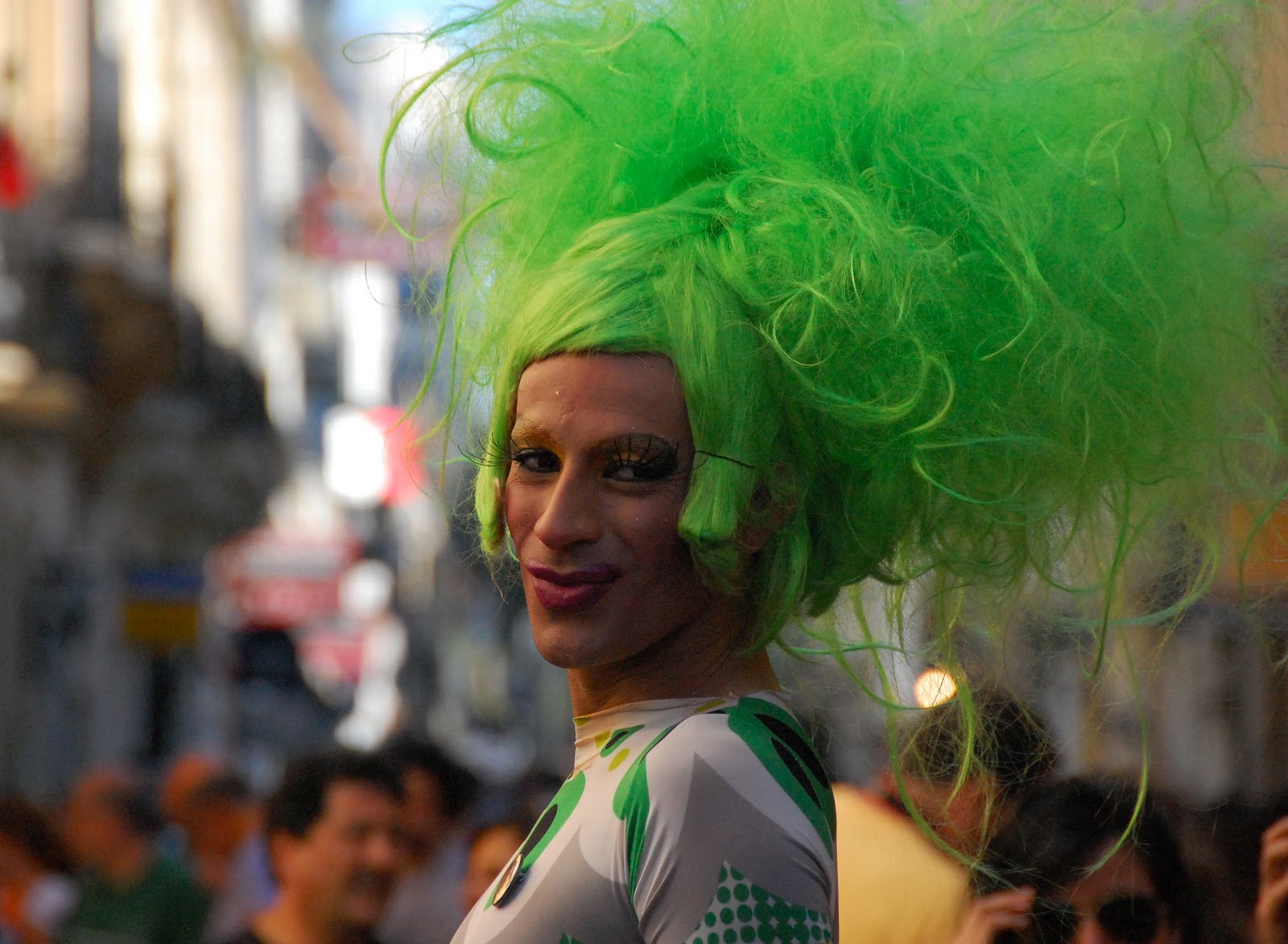
The most celebrated date on Australia's gay and lesbian calendar, The Sydney Mardi Gras, has brought the usual collection of colourful characters onto the streets for what's increasingly become a mainstream event. Time was when the New South Wales police behaved with outright hostility towards public expressions of gay pride. Now they have their own float in the procession and the ranks of guys and gals in blue get as big a cheer as the Dykes on Bikes, Sisters of Perpetual Indulgence or any of those other quaintly amusing subcultures that make up one of the most vigorous gay communities in the world.

The big change in the past decade or so is that straight suburban teenagers no longer go to Mardi Gras to jeer or gawk but to join the party. It's perhaps the ultimate sign that the gay community has succeeded not only in breaking down barriers of prejudice but being accepted as part of the mainstream in Australian life, as ubiquitous as Rotary or the Country Women's Association. Some gays we know are less than enthused that their lifestyles are now seen to be no more louche than an afternoon of tea and scones but that's another story.

All this aside, it would be wrong to read too much into the wider community's collective high five to gay people for the vast strides they've made in recent years. The theme of this year's Mardi Gras was the campaign for same sex marriage, something quite different, we suspect, from the almost universally accepted notion now that gay people should have equal rights in every other facet of secular life. Many watching this year's procession will have shared our discomfort about the notion of gays wanting to intrude on the one remaining bastion of exclusivity for the heterosexual majority. As it happens. some of our gay friends and acquaintances feel the same.

Now, let's make it clear that this is not a religious argument. Grubsheet has no truck with clergy - Christian, Muslim or anything else - interfering in the lives of individuals beyond providing spiritual guidance. Indeed, we view with total distaste, bans on the ordination of women and other such nonsense justified by biblical texts that predate even the central Christian message of Jesus Christ having come to rewrite the previous script. We can also contemplate the notion of gay priests on the basis that if God's love is for all, then it's axiomatic that the message and sacraments can be spread by all. What makes heterosexual clergy any more worthy than gay clergy? What makes them more capable of ministering to others in a spiritual or social sense?

Where we part company with the central premise of those arguing for same sex marriage is that same sex partners clearly don't have the same physical and social function as partners of the opposite sex. And that is the central human act of procreation. That's right, those two forgotten people in any heterosexual relationship who make babies, nurse them through the torments of childhood and adolescence and prepare them for their roles as taxpayers to fund everything from gay neighbourhood centres to warships.  Marriage is for them, we think, not for same sex couples who want dazzling white weddings and formal expressions of total commitment before the state but don't see it as their role to perpetuate the species for the obvious reason that they can't. At least not in the conventional sense that doesn't involve surrogacy, intrusive medical intervention or the use of implements originally conceived for use in the kitchen.

The two frocks wedding brigade just don't seem to get it. Yes, they can go down the turkey baster path. Yes, they can adopt kids just like anyone else. But the formal act of state marriage ought to be for straight people, the ultimate act of differentiation if you like. Anything else is equal rights without responsibility. And that is the responsibility - overwhelmingly the burden of heterosexuals - to populate the planet or perish.  This has nothing to do with religion or politics but a deeply held conviction in much of the community that same sex marriage is simply not on, a bridge too far, a line not to be crossed.

Governments ignore this sentiment at their peril, as Julia Gillard knows, even as elements in her party try to force her into accepting a position that anyone with a calibrated political weather vane knows is unacceptable to middle Australia. Yes, the Greens leader, Bob Brown, lives in a loving homosexual union and good luck to him. We've been to their home and they're a lovely couple. Yes, a good proportion of the wider community supports his view and that of his party that the time for same sex marriage has come. But a majority of Australians? Nuh. Believe otherwise and you'll be blown out of the  election funnel quicker than a carbon emission burst.